

Guides
Marketing analytics careers: a practical guide for 2027
Marketing analytics careers guide for 2027 covering role tracks, reliable measurement, portfolio proof, education choices, pay research, and career planning.
What to take away
- Marketing analytics begins with a decision, a defined measure, and a trustworthy data process.
- Titles overlap, so compare the questions, methods, production duties, and decision authority behind each job.
- A strong portfolio shows validation, uncertainty, limits, and an action, not only a polished dashboard.
- Career progress comes from owning harder decisions with better evidence and clearer accountability.
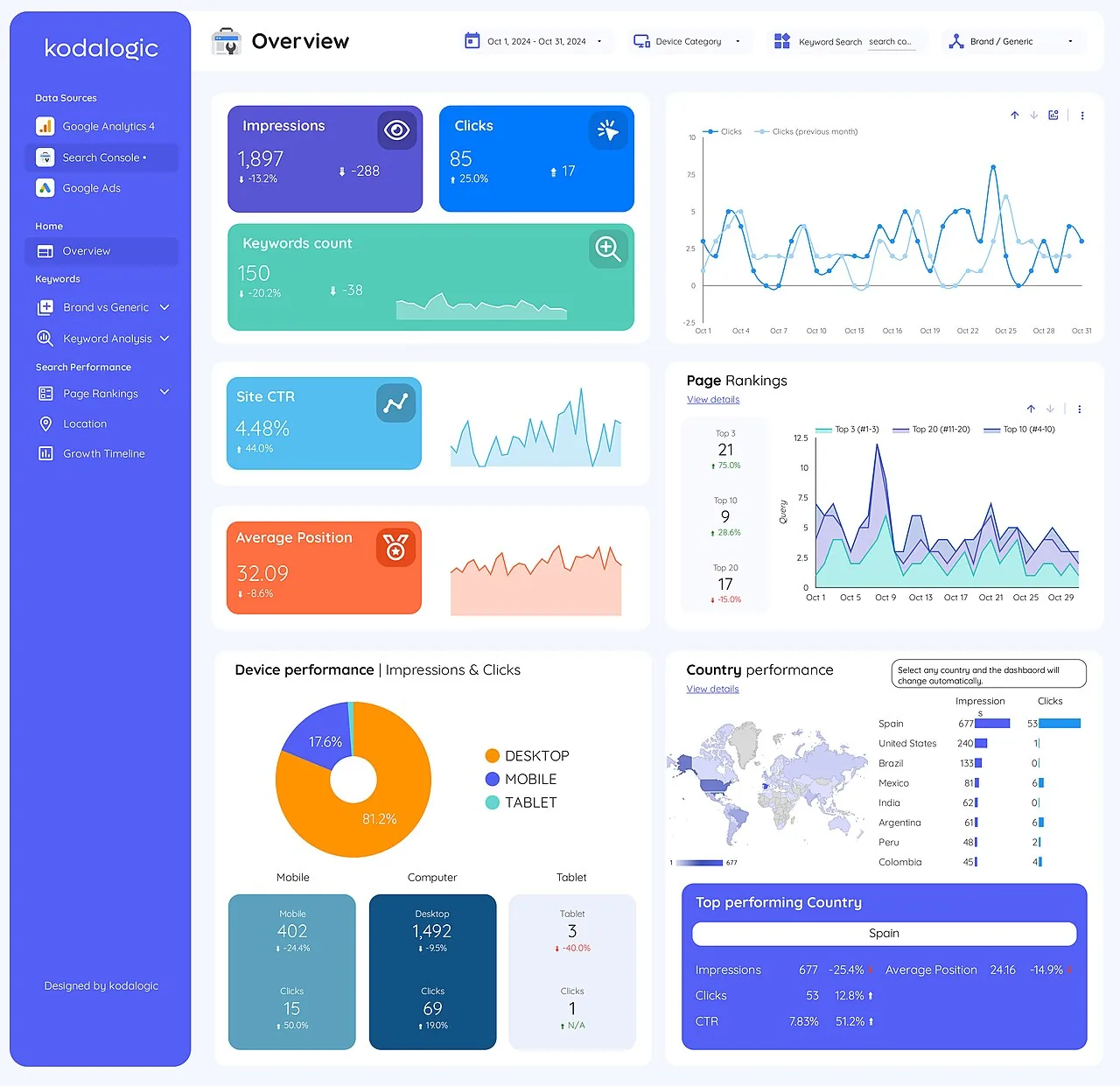
Marketing analytics careers turn marketing questions into trustworthy measurement, analysis, and decisions. The job is not simply building dashboards or reporting whether a number rose. Analysts clarify what the business needs to decide, examine how data was created, choose an appropriate method, communicate uncertainty, and recommend what to do next.
Build the career around decisions, not dashboards
NIST's business guidance on data and analysis recommends selecting a small set of measures tied to organizational objectives, tracking trends, making information available, using it for decisions, and protecting data and systems. That sequence is a useful standard for marketing analytics work because it puts the decision and data stewardship ahead of chart production.
The field ranges from channel reporting to experimental design, attribution, marketing-mix analysis, customer analytics, and data engineering. A practical career choice for 2027 starts with the questions, data, methods, and consequences behind the title. Two marketing analyst jobs can require very different technical depth.
What marketing analysts are responsible for
Marketing analysts help teams plan, monitor, evaluate, and improve activity. Their work should connect an audience, intervention, expected behavior, outcome, time horizon, and comparison. They also need to know when available data cannot answer the question and when a privacy, legal, research, security, or engineering specialist must be involved.
- Translate a business decision into measurable questions.
- Define events, metrics, dimensions, cohorts, and comparison periods.
- Audit collection, transformations, joins, and data quality.
- Analyze campaigns, funnels, customers, products, and markets.
- Design tests and interpret causal evidence carefully.
- Build reports that expose definitions and uncertainty.
- Recommend action and monitor unintended effects.
The main career tracks
Campaign and channel analyst
Campaign analysts evaluate paid media, organic channels, email, partnerships, events, or integrated programs. They reconcile platform data with business outcomes, check tracking, compare audiences and creative, and explain what optimization can and cannot prove. Platform-reported attribution is an input, not an unquestionable causal account.
Web and digital analytics specialist
Digital analysts design measurement plans for websites and apps, specify events and parameters, validate implementation, build explorations, and connect behavior with outcomes. They work with developers, tag managers, consent systems, product teams, and analytics platforms. The role requires patience with definitions because one event name can conceal several user actions.
Lifecycle and customer analyst
Lifecycle analysts study acquisition cohorts, onboarding, retention, reactivation, churn, and customer value. They may support CRM, email, loyalty, product adoption, or customer success. Good work distinguishes correlation from intervention effects and avoids treating every active customer as evidence that a message caused the behavior.
Marketing science and experimentation
Marketing scientists design experiments, evaluate incrementality, model response, and address selection bias or confounding. They may use statistics, SQL, Python, R, notebooks, and specialized testing platforms. The most advanced method is not automatically the best. Design quality, assumptions, power, operational feasibility, and decision relevance matter.
Attribution and marketing-mix analysis
Attribution analysts examine how credit is assigned across touchpoints, while marketing-mix work estimates relationships between spending, external factors, and outcomes at an aggregate level. Both approaches rely on assumptions and can produce false precision. Analysts should present ranges, validation, sensitivity, and uses that fit the method rather than declaring one final truth.
Analytics engineering and business intelligence
Analytics engineers and BI specialists create reliable models, metric layers, pipelines, tests, permissions, and reporting systems. In smaller teams, a marketing analyst may perform some of this work. At scale, separating data production from analysis can improve reliability, but only when definitions and ownership remain shared.
The marketing analytics workflow
Start with the decision
Ask who will act, what choices are available, when the decision is due, and what evidence could change it. A request for a dashboard may actually be a question about budget, audience, creative, product, or measurement failure. Reframing the request can prevent weeks of reporting that nobody uses.
Define the measurement
Write each metric in plain language, including numerator, denominator, eligibility, exclusions, time window, currency, timezone, and source. Define entity and grain: person, account, session, order, campaign, or day. Agree on how identity, consent, refunds, duplicates, late events, and missing values are handled.
Validate before interpreting
Compare raw and transformed counts, inspect distributions, reconcile totals, examine breaks by platform or date, and test known cases. A plausible chart can still be wrong. Keep quality checks near the transformation and display definitions where report users can find them.
Choose the method
Descriptive analysis shows what was recorded. Diagnostic work investigates possible explanations. Predictive models estimate future or unobserved values. Experiments and causal methods address intervention effects under specific assumptions. Analysts should name the category and avoid causal verbs when the design only supports association.
Communicate a decision
Lead with the question, finding, confidence, limitation, and recommended action. Show the minimum chart needed to understand the comparison. Provide definitions and deeper diagnostics separately. A good analysis allows a decision-maker to disagree with the recommendation without misunderstanding the evidence.
Skills employers can evaluate
- Marketing and customer-journey understanding
- Metric design and measurement planning
- Spreadsheet analysis and reproducible calculations
- SQL querying, joins, aggregation, and validation
- Data visualization and explanatory writing
- Statistics, experiments, and uncertainty
- Analytics implementation and event-taxonomy awareness
- BI tools and semantic definitions
- Python or R for advanced analysis where relevant
- Privacy, access, documentation, and stakeholder communication
Not every role needs every tool. A campaign analyst may need stronger channel knowledge and spreadsheets, while a marketing scientist may need advanced statistics and programming. Read the actual data scale, method, and team support. A long technology list can indicate a broad role or an employer that has not separated analytics from engineering.
How to build a credible portfolio
Use public, synthetic, or permitted data. Never expose personal, customer, employer, or client information. Begin with a decision, not a dataset. Create a short data dictionary and document the data-generating process, quality checks, transformation, method, and known limitations.
- State the business question and available actions.
- Define the unit of analysis and every central metric.
- Show at least two data-quality checks.
- Use a method appropriate to the evidence.
- Explain uncertainty and alternative interpretations.
- Recommend a bounded next action or test.
- Include reproducible queries or calculations when permitted.
One strong portfolio project might compare acquisition cohorts, audit campaign attribution, design an experiment, or diagnose a funnel change. The most valuable section is often what you cannot conclude. That protects the business from acting on false certainty and shows mature analytical judgment.
Education and course options
Employers draw marketing analysts from business, marketing, economics, statistics, computer science, social science, and other backgrounds. Read the actual data, methods, business context, and support behind a role before deciding whether a degree or course is relevant.
Courses can provide a useful sequence for a specific platform or method. Compare the live syllabus, exercises, access, price, assessment, and product dependence with a real skill gap. Then apply the material to a permitted project that another person can review.
Salary and job outlook
There is no single federal occupation called marketing analytics. Salary and outlook research therefore requires a careful proxy: match the actual duties to one or more defined occupations, record the source year, and state where the comparison breaks down.
Compare current jobs with matched data, methods, technical requirements, location, industry, seniority, and employment type. A dashboard analyst, experimentation specialist, analytics engineer, and marketing-science lead should not be combined merely because all use data. Total compensation, data access, decision authority, and on-call responsibility for reporting systems also matter.
A twelve-week entry plan
- Weeks 1 and 2: define a marketing decision, metrics, and data dictionary.
- Weeks 3 and 4: clean and validate a public or synthetic dataset.
- Weeks 5 and 6: analyze the question with spreadsheets or SQL.
- Weeks 7 and 8: learn the statistical method needed for the decision.
- Weeks 9 and 10: build a concise report and propose a test or action.
- Weeks 11 and 12: obtain technical and business feedback, revise, and publish.
Questions to ask before accepting a role
- Which decisions will my work influence?
- Who owns event collection, models, and metric definitions?
- How reliable and accessible is the current data?
- Which methods are expected beyond descriptive reporting?
- Who reviews analytical work and experiments?
- How are privacy, permissions, and sensitive data governed?
- What percentage of time goes to recurring reports versus new analysis?
The strongest marketing analytics careers combine technical accuracy with business restraint. Analysts create value by finding what is decision-relevant, detecting when data is unreliable, choosing a defensible method, and communicating uncertainty clearly. They also preserve definitions and decision history so teams do not repeat the same argument every quarter. Tools will change, but those habits transfer across platforms, industries, and marketing questions.
Quick comparison
| Career track | Central question | Useful evidence |
|---|---|---|
| Campaign analytics | Which activity merits another dollar or test | Reconciliation, comparison, and decision memo |
| Digital measurement | Was behavior captured and defined correctly | Tracking plan, test cases, and quality log |
| Lifecycle analytics | Where and why customer behavior changes | Cohorts, definitions, limits, and action |
| Marketing science | What would happen under another intervention | Design, assumptions, validation, and sensitivity |
Verify marketing analytics careers before release
For marketing analytics careers, the GAO evaluation design guide explains how evaluation questions, evidence needs, and design choices fit together. The guide is written for federal program evaluation. Use its design discipline as a check on the method, not as proof that a marketing result is causal or transferable.
The W3C Privacy Principles statement gives system designers a shared vocabulary for privacy and warns against shifting privacy work onto individuals. Apply that principle to the data flow behind marketing analytics careers. It does not replace the law, contract terms, consent analysis, or a review of the actual configuration.
The GOV.UK technology selection guidance recommends choices that can change over time, preserve data control, address security risk, and include ownership cost. Those public-service rules become useful buying questions for marketing analytics careers, but they are not private-sector mandates or product endorsements.
Apply these checks to the actual marketing analytics careers workflow. Record the tested data, roles, product versions, exceptions, and approval date. Repeat the review after a material source, model, access, contract, or decision change. The added sources define separate evaluation, privacy, and operating questions; none certifies the local implementation or supplies a guaranteed marketing result.
Common questions
What does a marketing analyst do?
A marketing analyst defines questions and measures, validates data, selects methods, explains uncertainty, and recommends actions. The exact mix varies by team.
Is marketing analytics a good career in 2027?
It can suit people who enjoy business questions, data quality, analysis, technical learning, and clear communication. Evaluate the actual role and support.
Do marketing analysts need to code?
Not every role requires programming. Spreadsheet, SQL, BI, statistics, or programming depth should match the data scale and methods used in the job.
What should a marketing analytics portfolio show?
Show the decision, definitions, permitted data, checks, method, uncertainty, recommendation, and one meaningful revision after review.